Learning the Basics

Music can move us in the same way as assignments, books, and people do. To understand how music does this, we must understand how to analyze its rhetoric.

To begin, Aristotle defines rhetoric as “the faculty of discovering in any particular case all of the available means of persuasion,” but it can also be described as the art, practice, and study of communication by humans. The study of rhetoric can be broken down into two categories, whose terms were coined by Kant.
Ars and Techne

Techne can be described as the tools of a craft, a practice-based, focused on methods of composing, inventing, and communicating. Forms, sentences, punctuation, words, and technology would all fall under techno. Ars is described as the tool of art and aesthetics. The incorporation of pathos, story-telling, and expression of human vision is the ars element in songs.

The terms ars and techne call in to question of music’s persuasion. How much is due to the emotional appeal, engaging themes that are easy to relate to, the artist’s pathos, etc.? How much is due to the riffs, pauses, and repetition?

Rhetoric in Literature and Writing vs. Musical Rhetoric

Similes, metaphors, ethos, pathos, logos, hyperboles, and other rhetorical devices make poems, speeches, and essays more effective. Rhythm, beats, notes, harmony, and other musical devices help achieve music’s same level of success and persuasion.

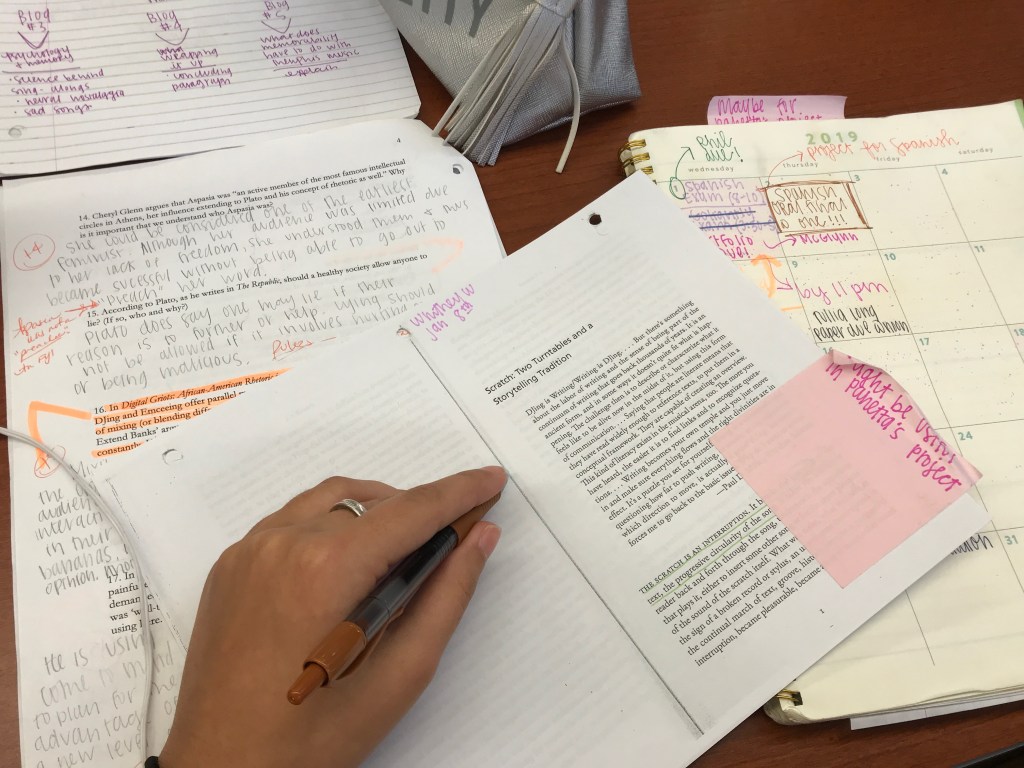
In Digital Griots: African American Rhetoric in a Multimedia Age, Adam J. Banks argues that DJing and Emceeing offer parallel models for traditional writing, and the act of mixing different tracks, or blending different beats is the “art of transition and revision.” We use transition and revision in writing and composing often. Mixing music while DJing allows the DJ to manipulate the crowd’s mood and reactions, in the same way, a writer may also “mix” or revise their words to influence the audience to react a certain way.
Applying the Basics to Memorability

There are five universally notable tools used in the art of persuasion, and they are known as the canons of rhetoric.

  • Invention/ Content
  • Arrangement
  • Delivery
  • Style
  • Memory

When I think of the words “memory” and “music,” I think of how easily I’m able to remember song lyrics. What do you think of?

When it comes to musical composition, practice, and performance, memory surfaces in ways that are both distinct and unrecognizable, calling our attention to its many rhetorical capabilities.

Rhetorical Devices Influence Memory

A crucial step of the songwriting process is figuring out how you want the song to be remembered; this subsequently makes considerations of how to use specific rhetorical devices essential. Is the song’s debut going to be at a live show, or is iTunes going to air it at midnight? Is a song about world peace going to be as effective during calm global affairs, or would it be better to release it after Trump’s controversial state of the union address? Should I release five single records within six months or advertise an album that won’t be out for another year?

Subtleties Musicians use to Enhance or Change the Rhetorical Argument in a Musical Piece

Rhythm

Rhythm is setting sounds to a purposeful time during the song or track. Rhythm is the key ingredient for every musical piece. It is the way musicians can make unusual sounds like doorbells ringing, cash registers opening and echoing police sirens sound like they “belong” in the songs; these sounds would be just that- sounds- if they were not set to a rhythm. A patterned rhythm can produce beats, and those beats affect the argument of the song. Macklemore’s song “Same Love” slowly starts as he talks about coming out as homosexual, and as his thought process accelerates so does the beat of the song. The chorus of the song repeats “I can’t change even if I wanted to,” in a much slower pace which emphasizes the overall argument that you don’t choose to love whom you do and society should respect that.

Melody

Melodies are made up of rhythm and pitch to create a tune. While Melodies can affect the argument of a song, pairing them with lyrics can reinforce the theme of the song. Often songs that tell a story use a melody that moves or changes direction at pivotal moments in the story to evoke pathos in the audience. An example of this would be Pumba’s story during the song “Hakuna Matata.” Pumba tells the story of losing friends because no one could handle his aroma. At the climax of his story, when he felt the saddest, the melody shifted downward but shifted upward when he started to talk about the philosophy of Hakuna Matata.

Harmony

Harmony can be described as multiple pitches or chords being played together simultaneously. There is a general theory that major chords evoke a positive emotion and minor chords evoke a negative feeling; this isn’t necessarily always true, but it does usually seem that way in our culture. Major chords are blended in the song “Everybody Wants to be a Cat,” from the movie The Aristocats. The harmony produced in this song evokes a happy feeling and invites the audience to dance without using very many lyrics. The minor chords in Alice in Wonderland’s “Very Good Advice” elicit a somber tone that makes the audience sympathize with Alice.

Form

Form, plainly explained is the way musical compositions are structured. The verses, refrains, bridge sections, and instrumentals are all elements of form that can be manipulated to make a song credible. Sometimes songs of praise or worship often structured where there is a pause either in the instrumentals or in the lyrics. This technique allows audiences to grasp better the message being conveyed. The band Elevation Worship does often use this technique to involve the audience and as a way to persuade them towards Christ.

Tempo

The tempo is the speed at which the rhythm and beats are displayed. Tempos that are faster produce a happier feeling like the song “ABC” by the Jackson 5.  The short, fast beats of ‘A buh-buh buh buh’ engage the audience in a way that welcomes their participation in the joyfulness. Slower tempo songs like “Tale as Old as Time” in Beauty and the Beast suggest and prepare the audience for a somber mood.

Applying what we know about rhetoric to explain the memorability of “RESPECT” sung by Aretha Franklin:

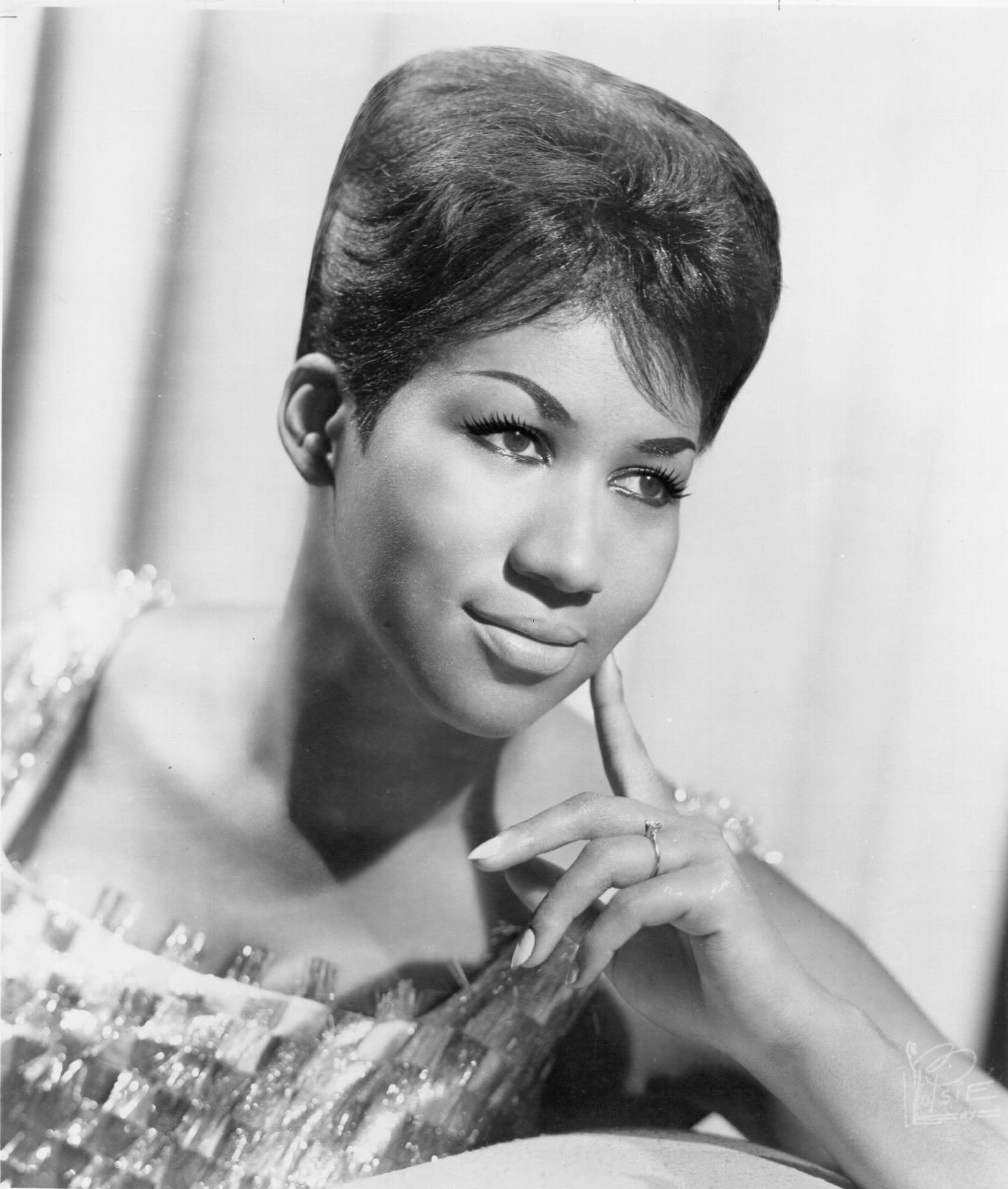
Music is a powerful platform that is often to discuss politics and social issues. Artists are frequently motivated by social justice issues and use their musical talents to popularize their opinions in the same way activists read speeches at rallies. In 1967 Aretha Franklin released a song that became a protest anthem for decades to come. Much of the song’s success can be accredited to Franklin’s use of kairos. The civil rights movement and feminism was getting more attention than it ever had even though many Americans still resisted its premise of equality; Aretha Franklin addressed the opposers of the campaign by explaining, “Ain’t gonna do you wrong/’cause I don’t wanna/All I’m askin’/Is for a little respect.” The rhyme scheme and repetition in the lyrics made it memorable to anyone that heard it. African American women in the 1960s were given minimal credibility, which is an issue addressed in the song; memorability of her message had to be even stronger. The tempo and the overall sound also played a role in the memorability. The recorded lyrics weren’t the only way she evoked pathos from her audiences- the way she sang, with such powerful vocals, exhibited her passion further.

Psychology & Music

Music psychology, or the music of psychology, is a field that investigates the fundamental mental activities of almost all music-related operations, such as listening to, dancing to, and composing, by drawing from the core disciplines of cognitive science, psychology, computer science, and music. It aims to shed light on musical behaviors like, the way music is processed, incorporated into everyday life, and overall musical experiences. This field’s research examines the contributors of “music theory through investigations of the perception and computational modeling of musical structures such as melody, harmony, tonality, rhythm, meter, and form”(The Audiopedia)

Olin G. Parker, professor at the University of Georgia in Athens, claims, “music is a product of the brain,” by explaining that pitch, timbre, loudness was frequency, form, amplitude before the brain neurologically transformed them to musical devices. This transformation into music is because our brain’s cerebrum is developed based on our unique, past musical experience.

“Man is a product of his environmental influences.”

Parker, Olin G. Music Cognition: The Relationship of Psychology and Music

There is a reason you want to listen to “Irreplaceable” by Beyonce when your ex-boyfriend admits that he was wrong, but also when you are in the middle of an argument with him. Our interpretations of music have a lot to do with our environmental influences and can manipulate our emotions. It is easy to believe that the sound of waves can reduce anxiety, but did you know that happy music also can boost your immune system?

 The Music in Mood Regulation (MMR) scale found that individuals regulate their mood with music, and the effects often are divided into seven categories: Entertainment, Revival, Strong Sensation, Mental Work, Solace, Diversion, and Discharge. Solace, Diversion, and Discharge are all negative and ineffective ways to regulate emotions via music. For example, Solace explains why some people listen to sad music when they are already sad; music that matches their mood can make some feel understood. Diversion takes place when one listens to music that is the opposite of their mood, as a means of distraction. An example of this would be listening to “Fearless” Taylor Swift when you are actually feeling apprehensive.

All in all, listening to music is a coping mechanism, and not all forms of coping are healthy.

Here is a list of other insightful sources:

The Science Behind Memory

What is your favorite memory that involves a song or music? Is it the first song you learned to play a song on the piano, the time before that party when Miley Cyrus played on repeat, or the first concert you were allowed to attend with friends?

This video explains how memories are saved.

Catchy Songs

Have you ever had a song stuck in your head, and it wouldn’t go away?

If you answered “yes,” then it is likely you had an earworm!

“Earworms” is the nickname of a discovered phenomenon that occurs when certain songs stick in our head; the actual name of the phenomenon is called involuntary musical imagery (INMI). The academic journal, Psychology of Aesthetics, Creativity and the Art, published a study that found earworms occur most frequently when the tunes are expelled faster with an easy-to-remember melody. The melody is also more likely to “contour,”by following a pattern where the first phrase rises in pitch and the second falls, when earworms appear. This research has exposed a level of predictability when it comes to whether or not a song will be memorable.

What else makes some songs catchier than others?

Musicologists, psychologists, and some scientists have made an effort to answer such questions about why there is difference in ease when it comes to remembering a song.

Dr. Daniel Mullensiefen and D. Alison Pawley have theorized four elements that catchy songs possess. Here are their findings summarized by TIBI PUIU:

  1. “Longer and detailed musical phrases. The breath a vocalist takes as they sing a line is crucial to creating a sing-along-able tune. The longer a vocal in one breath, the more likely we are to sing along.”
  2. “A higher number of pitches in the chorus hook. The more sounds there are, the more infectious a song becomes. Combining longer musical phrases and a hook over three different pitches was found to be key to sing-along success.”
  3. “Male vocalists. Singing along to a song may be a subconscious war cry, tapping into an inherent tribal part of our consciousness. Psychologically we look to men to lead us into battle, so it could be in our intuitive nature to follow male-fronted songs.”
  4. Higher male voices with noticeable vocal effort. This indicates high energy and purpose, particularly when combined with a smaller vocal range.”

https://www.zmescience.com/research/studies/what-makes-a-song-catchy-science-explains/

Do these findings answer whether music is more of a craft than an art? I don’t think so but, the reason for memorability seems to be leaning closer to the techne side.

The Ever- Evolving Identity of Memphis Music Remains Memorable

“Memphis is the place where rock was born and Martin Luther King Jr., was killed. It’s full of contradictions, abject poverty, and riches that only music can provide.” – Shawn Amos

What do God and Memphis music have in common?

They are both describable but indefinable. Both beings are described differently by people who know or have heard them, making them indefinable. Braided into theories of God’s identity are ideas of love, compassion, and forgiveness; interwoven in Memphis’s music identity are hints of blues, jazz, soul, and rock-n-roll.

Like the city it’s named after, Memphis music cannot be characterized by one technique or by one kind of people; Memphis (the city and the music) is a wholesome blend of old and new. Memphis music has a soulful flair that can be heard in some of the greatest songwriters’ and performers’ songs, delivered in many forms. Memphis introduced “rockabilly” as a music style that was popularized by 901’s very own- B.B. King, W.C. Handy, Elvis Presley, and even Johnny Cash. This describable yet indefinable genre-esque musicality can be heard and seen more clearly in some performers than others, but one thing is for sure- if it ever needs to be listened to, a stroll down Beale Street will suffice most organically.

A Performance by One of Memphis Music’s Many Faces: Al Green

Al Green, a famous soul singer in the 1970s, could blend secular and gospel musical styles that mimicked Memphis soul. His first major hit was the song “Let’s Stay Together”. Al Green’s style can be attributed to his southern roots, his love for the gospel (he became a devout reverend), and especially his interaction Hi Records of Memphis Tennessee.

In 1972 Soul Train hosted Green and he performed “Love and Happiness,” a song from his hit album, I’m Still in Love with You. The Memphis musicality of this love song permits it to be interpreted as a song of praise. The choice to use a jazz piano, electric guitar, saxophones, trumpets and drum added to the ambiance of Memphis musical impression at this performance. Green never directly addresses Memphis or its logos in the duration of this performance, but he did indirectly highlight the culture of its musicality by the way the song was formed and delivered. For example, even though the theme of the song lyrics is universal, Green put a Memphis spin on them by using slang words and shortened pronunciations.

Even though Al Green is not a Memphis native, music enthusiasts and scholars believe his music is an exemplary means of description for Memphis music because of his blend of musical traits that, in turn, create a Memphis-like memorability.

Young Dolph Redefines Memphis Music

Adolph Thornton Jr., also known as Young Dolph, survived growing up on the streets of Memphis to become, not only a local hero, but a nationwide-renowned rapper by 2014. Young Dolph’s thick Tennessee drawl and strong Memphis pride distinguishes him from most rappers.

While Al Green’s Memphis musicality was evident in his style, Dolph’s lyrics about Memphis from his point of view have aided in the transformation of Memphis music. Dolph, who calls himself the king of Memphis, talks about topics that give the city its rough-around-the-edges character, but it only has seemed to propel his career. In 2016, King of Memphis came in at number eight on Billboard ‘ s Top R&B / Hip-Hop Album Charts.

Connecting the Dots: Why Does Memphis Music Remain Memorable Despite the Changes?

Memphis music is culture. It is the manipulation of rhetorical devices that reflect the city’s dynamic way of life. The memorability of Memphis music will live on forever because of its history and unique sound.


Design a site like this with WordPress.com
Get started